
This package of Tours in Peru and Machu Picchu 13 Days & 12 Nights, offers you the visit of beautiful towns, museums, churches and temples in a tour with impressive landscapes between Lima, Ica, Nazca, Cusco and Puno, during 13 incredible days.
Get to know the capital of Peru, known as the city of kings; visit the paracas national reserve and taste an infinite variety of wines and piscos.
Then travel to Cusco and explore the Inca and colonial heritage wealth of Cusco and in Machu Picchu, the lost city of the Incas and discover how the past lives on in the wonderful islands of Titicaca, the highest navigable lake in the world.
If you chose this package you can trek on the traditional Inca Trail to Machu Picchu. Considered one of the best treks in the world due a rare combination of its exquisite natural beauty of flora, existence of endangered species and mysterious Inca sites.
Short Itinerary:
- Day 1: Lima
- Day 2: Lima City tour
- Day 3: Ballestas island & Oasis Huacachina
- Day 4: Nazca Lines – Lima
- Day 5: Flight Lima – Cusco & Cusco city tour
- Day 6: Super Sacred Valley Tour
- Day 7: Inca Trail to Machu picchu
- Day 8: Inca Trail to Machu picchu
- Day 9: Inca Trail to Machu picchu
- Day 10: Machu picchu tour – Cusco
- Day 11: Cusco – Titicaca Lake Puno
- Day 12: Titicaca Lake: Uros and Taquile islands
- Day 13: Flight Puno (Juliaca) – Lima
General information
Itinerary
Day 01: LIMA
Pick up upon arrival at Lima’s airport and transportation to the Hotel located in Miraflores.
Day 02: LIMA CITY TOUR
Breakfast, In the morning, Lima city tour (half day).
9:00 Hr. You will be picked up from your hotel. The Lima city in Perú begins at Ancestral Lima, We will have panoramic view of the “Pucllana Pyramid” a magnificent ceremonial and archeological center built in the 4th century a.D. and considered a “sacred village” by the Incas. The Viceroyalty of Perú was the most important of the Spanish Empire and Lima was its capital. Then we will visit the Colonial part of Lima, the Historical Center of Lima, where you will appreciate more than fifty monuments and Colonial edifications, such as the Paseo de la República, the San Martín Square, the Main Square of Lima, the Government Palace, the Archbishop’s Palace, the Cathedral Basilica, and the City Council Palace amongst others.
After we will go to the MUSEUM OF THE BANCO CENTRAL DE RESERVA, where we will admire the “Treasures of Perú” Collection, a fine selection of objects made of gold, ceramics and textiles from different pre-columbian cultures. Then we will visit the monumental SAN FRANCISCO CONVENT, which displays the largest collection of religious art in America. Our highlight will be the visit of the underground vaults, known as “Catacumbas” or Catacombs.
Finally we will visit traditional residential areas of Lima and Larcomar. Overnight at the Hotel.
Day 03: BALLESTAS ISLAND & OASIS HUACACHINA
03:45 Hr. Transfer to the Cruz del Sur bus station, for your trip to Paracas.
07:50 Hr. Upon arrival in Paracas transfer to the mole of «El Chaco» where you’ll take a motorboat excursion to the Ballestas island and Geoglyph «El Candelabro».
08:00 Hr. Motor boat towards the Ballestas Islands.
The ballestas Islands are spectacular, eroded into numerous arches and caves, we will visit the different islands for two hours, during this tour you can appreciate the figure of the Candelabro or the candlestick, a gigantic figure engraved in the desert of the Paracas Peninsula. Also we will see thousands of seabirds, some of which are very rare, very fabulous marine fauna, such as large colonies of sea lions on the beaches and rocks as well as seals. It is also possible to see groups of Humboldt penguins in small caves, as well as a wide variety of shorebirds such as cormorants, boobies, pelicans, seagulls, and tendrils. The islands are known as «the Galapagos of Peru».
10:00 Hr. Return to Paracas – Transfer to the Bus station for your trip to Ica.
12:30 Hr. Upon arrival you will be picked up from the bus station and transfer to Ica city tour.
13:00 Hr. Start to Ica City tour, we will visit the Campiñas + Buggies ride in the desert of Huacachina. During the tour we will visit: Wine cellar and Restaurant «El Catador» The most tourist winery in Ica, we can taste its wines, pisco, cachinas and know the elements that are used for the elaboration of Piscos and Wines in an artisanal way, they will also have time to have lunch (not include lunch), here you will find typical Ica food. Then we will visit the main square of Ica.
We will enjoy an impressive landscape where we will find the Huacachina Lagoon surrounded by immense dunes, a natural oasis in the middle of the desert and surrounded by beautiful palm trees.
We will drive you to the desert oasis of Huacachina. Here you can try your hand at some adventure sports including sand boarding. In the desert of Huacachina, wwe can practice of Sandboarding, included crossing much of the desert going up and down the dunes. Finally, approximately 17:30 Hr. Transfer to the bus station.
18:00 Hr. Trip from Ica to Nazca.
21:00 Hr. Upon arrival transfer to your hotel in Nazca.
Did you know?
- The Ballestas Islands are home to the Humboldt penguin (now endangered).
- The sea lion breeding season is between January and March. If you are lucky enough to travel during this time of year, you will see that the beaches are full of sea lion pups and huge rival males defending their territories.
- On the way to the Islands you will see “El Candelabro”, a gigantic geoglyph in the shape of a candlestick (or is it a cactus?) Found on the north side of the Paracas peninsula. Sailors used to use this as a landmark.
What to bring to the Ballestas Islands Tour?
Due to the increasing winds during the course of the day, tours only depart in the mornings at 08:00 am and 10:00 am every day. In general, we advise to do the tour at 08:00 am, as the weather conditions are better, as well as to observe the wildlife.
- A shirt for the wind or a jacket.
- Sunglasses, a hat, and sunscreen.
- Camera or cell phone to take photos.
Day 04: NAZCA LINES
07:00 Hr. Breakfast.
08:00 Hr. Transfer to the Nazca airport.
08:30 Hr. Overflight the Nazca lines (35 mins aprox.).
The tour to the famous Nazca lines. Cut into the stony desert are large number of lines, not only parallels and geometrical figures, but also designs such as a dog, an enormous monkey, a bird with a wing span of over 100 meters, a spider and a tree. The lines, that represent some sort of vast astronomical pre-Inca calendar, are best seen from the air, we will take a half hour flight above the Nazca Lines geoglyphs then you’ll visit to the Chauchilla cementery, where skulls, mummies and pottery shards littering the desert. Lunch in Nazca.
15:30Hr. you’ll take the motor coach Royal class to Lima. Pick up upon arrival at Lima’s Bus Station and transfer to the Hotel located in Miraflores. Overnight.
Did you know?
- The Nazca Lines vary from simple lines and geometric shapes to complex figures, that is why they are very mysterious.
- The Nazca Lines can only be truly appreciated from the sky, however, they come from a time when there were no air flights.
- The most iconic figures include many animals such as the hummingbird, the monkey and the spider, which are currently replicated in modern pieces of jewelry and ceramics.
- The theories of the historians who investigate the creation of the lines range from the cartography of an astrological calendar, to the path of the underground aqueducts of the desert, to some kind of alien creation.
- Like the Nazca Lines, historians still debate when the aqueducts were created.
What to bring to the Nazca Lines Tour?
- Camera
- Original passport – important!
DAY 05: CUSCO CITY TOUR
After an early breakfast, transfer to the airport where we’ll take the flight to Cusco (AIRFARE INCLUDED). Upon arrival to Cusco’s Airport. Reception and transportation to the Hotel where you will receive an aromatic coca tea to stimulating for the height, will have the free morning to rest and also we suggest you have a light lunch in your hotel or in one of the surrounded.
12:45 Hr. Cusco City Tour From 13:00 Hr. to 18:00 Hr. This tour includes the Qoricancha (temple of the sun). The tour drives along the Circumvallation Road up to famous fortress of Sacsahuaman, Q’enqo, Puca Pucara and Tambomachay Including Spanish and English speaking guide. Include Tourist ticket valid for the entrance to many museums and ruins as well. Lodging at your hotel. ( Breakfast ).
18:00 Return to the Hotel.
Day 06: SACRED VALLEY TOUR
Breakfast.
“Super valley Tour”—is an absolute way to explore the highlights of the Sacred Valley in one day, not missing anything.
06:45 Hr. You will be picked up from your Hotel. Starting the tour at Chinchero Colorful Town, also in this town we will visit the house of one citizen where we are going to see the exposition about the weaving process. Then we are going to visit Moray “Circular Terraces” special and unique place, after this, the Salt Mines of Salineras.
12:20 Hr. Buffet Lunch provided in Urubamba town.
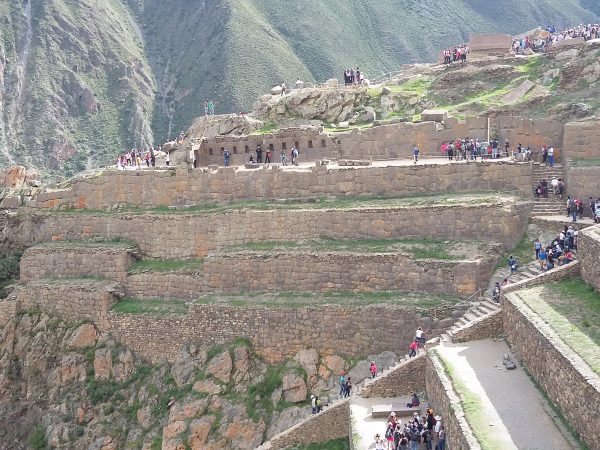
In the afternoon you’ll visit to the fortress of Ollantaytambo, an architectural group that in the days of the Tahuantinsuyo empire was a gigantic agricultural, administrative, social, religious and military complex.
Then we are going to visit the colorful market in Pisac and the archeological site.
Finally, we gonna return to Cusco approx. at 19:00 Hr. (Breakfast, Buffet Lunch).
What attractions will we visit in the Sacred Valley?
In the Sacred Valley you can see a great diversity of flora and fauna, as well as impressive archaeological complexes.
Pisac
Its archaeological complex has platforms, ceremonial baths and a large Inca cemetery, being the oldest in South America.
Their traditional market is held every Sunday, where the products that they themselves grow are still bartered. And if we are lucky to arrive on a Sunday we will participate in a mass in Quechua. In addition, we will see their mayors or «Varayoc» with their native clothes.
Urubamba
With incomparable landscapes that surround it, it is one of the main producers of «Corn or Choclo» in Cusco. It has very good restaurants to taste typical dishes made with local products. Do not forget to taste a delicious «Choclo con queso Cusqueño».
Ollantaytambo
The archaeological complex of Ollantaytambo was the main military, religious and agricultural center of the Inca Empire. The urban organization of the town still keeps the Inca structure, with its canalization system intact.
Chinchero
One of the most typical towns, where they still keep their customs and fight not to lose them. It is very common to see the residents with their typical costumes, while they enjoy teaching you their processes of dyeing and spinning wool, using natural dyes.
We also find archaeological remains of what was the Palace of the Inca Tupac Yupanqui. Above these remains a colonial church was built that houses the best samples of Cusco art with fresco paintings from the School of Fine Arts in Cusco, now a university.
Day 07: CUSCO TO WAYLLABAMBA 12KM (INCA TRAIL)
5:00 am we will pick you up from your hotel and ride by private bus bus to Piskacuchu (2700 msnm), (also known simply as km 82). Our private Bus gonna stop at the town of Ollantaytambo in the Sacred Valley for about half hour to give people the opportunity to have breakfast. Hikers cross the Vilcanota River and follow the trail to the right as it climbs steeply up from the river. It is a simple descent down to the Cusichaca river. You’ll also get a great view over the extensive Inca ruins of Llactapata (also known as Patallacta on some maps). Llactapata 2750 msnm means ‘upper town’ in Quechua and was primarily an agricultural station used to supply Machu Picchu with corn, the staple crop of the Incas. The settlement composed over one hundred buildings, houses for the workers and soldiers, including five baths. For a further 7 km the path follows the left bank of the river up to the small village of Wayllabamba (3,000 msnm). We’ll arrive to our campsite by 17:00 Hr. and after settling in for a bit you can relax and have a hot drink and snack with your team of porters. Overnight in our tents.
Day 08: WAYLLABAMBA TO PACAMAYO 12KM (INCA TRAIL)
At the second day our guide wakes us up at 5:30 with warm tee, we will leave Wayllabamba behind and begin the most difficult part of the trek. After breakfast at 6:00 am, we begins our hiking at 6:30 am. Following the left bank of the Llulluchayoc river for about 1 hour brings you to ‘Tres Piedras’ (three stones) and a small bridge over the Huayruro river. A little further on you’ll enter a beautiful cloud forest passing a waterfall. A further 4 hours trek through steepening woods we gonna pass the high spot which is called dead woman pass (4.600 msnm), where you can experience the female spirit, a woman that lives on the side of the mountain. The descent from this mountain is steep although not difficult. From this place we have a 2 hour hike down to our second camping spot (Pacamayu 3,600 msnm), where we will have our lunch. There are toilet facilities here. At the camp we will go to the bed around 18:30 Hr.
Day 09: PACAMAYO TO WINAY WAYNA 15KM (INCA TRAIL)
06:00 Hr. We will have our breakfast. This day is the longest but also the most impressive and most interesting due to the many Inca ruins that we will visit along the way. From the campsite at Pacamayo it takes about an hour to climb up to the ruins of Runkuracay (3800 msnm). These small circular ruins occupy a commanding position overlooking the Pacamayo valley. After 45 minute hike will bring you to the top of the second pass: Abra de Runkuracay (4,000 msnm). At last you’ll feel that you are walking along the trail of the Incas with paving, for the most part, being original. The descent down the steps from the pass is steep so take care. After about 1 hour from the 2nd pass you’ll arrive at Sayacmarca (3624 msnm) by way of a superbly designed stone staircase. After the visit we will have 25 min. to chakicoccha (3.600 msnm) where we will enjoy our lunch in natural surroundings and incredible landscape. After the lunch we have a one hour hiking to Phuyupatamarka (3.600 msnm), from this point we will have an easy two hour walk down to Wiñnahuayna (2.600 msnm), where we will settle our camp and our chef will make a nice buffet to everyone so we can say goodbye to the chefs and the porters in a very nice way at 18:30 Hr. also our guide will give you a short orientation and you will visit the Inca ruins of Wiñay Wayna, spending about an hour and a half there. We will explain the significance of the site and combine all the information given during the trek so you’re fully prepared for your visit to Machu Picchu the following day.
Day 10: WINAY WAYNA TO MACHU PICCHU 5KM (INCA TRAIL)
On the last day, Wake up time early at 03:30 am, We’ll eat breakfast at 4:00 am and wait at the checkpoint to be one of the first to start trekking when they open the gates at 5:30AM. We’ll wave goodbye to our team of porters and chef and then it’s “Forward On” to the Sun Gate (Inti Punku). From where we will have great views of Machu Picchu and all the surrounding mountains. Here we will have 20 min. to rest. Thereafter we have 10 min. down to the lost city of the Incas; Machu Picchu. Here the Inca trail ends and we will enter the one of the seven wonder, Machu Picchu. At the city, we have to pass the second checkpoint for leaving our bags and it will cost you 3 soles for every back, which is necessary. We will have two hours guided in Machu picchu. We suggest you after visiting Machu Picchu you can take the bus down to Aguas Calientes by 14:30 at the latest (assuming train departs at 16:30). Buses depart every 15 minutes. Check with the guide for actual times. This leaves you plenty of time at the ruins to climb HuaynaPicchu (must be arranged ahead of time). It takes about 1 hour to climb and 40 minutes to descend. Most people, however, leave the ruins at about 13:30 and return to Aguas Calientes for lunch (at the ruins there is only one restaurant and it’s very expensive). There are several small restaurants in Aguas Calientes to satisfy all budgets. You may also wish to pay a visit to the town’s famous thermal springs which feel great after finishing the trail. Entrance to the springs costs US$3, allow 2 hours to really enjoy them. After this we will take our train to Cusco and then transfer to your hotel.
INCA TRAIL INCLUDED:
Pick up from your hotel at the beginning of each tour.
Private bus for all routes.
Entrance fees to the Classic Inca Trail and Machu Picchu.
Professional English-speaking guide (two guides for groups of more than 9 people).
2 person tents with capacity for 3 people, for more space for your backpacks
Double thickness foam mattress.
Chef and kitchen equipment.
Meals on the Inca Trail: 3 breakfasts, 3 lunches, 3 dinners.
Porters (to carry tents, food and kitchen equipment).
Dining tent with camping tables and chairs.
Kitchen tent.
First aid kit that includes an emergency oxygen bottle.
Train ticket from Aguas Calientes Machu Picchu – Ollantaytambo – Cusco.
All transfers, tours and excursions specified in the itinerary.
INCA TRAIL NOT INCLUDED:
Breakfast the first morning: some hotels offer an early morning breakfast service.
Lunch at a restaurant in Aguas Calientes on day 4 of the trek.
Extra carrier to carry your things. (US $ 140.00).
Entrance to the hot springs of Aguas Calientes US $ 3.50.
Sleeping bags can be rented from our office for US $ 16 for the 4-day trek.
Tips for the guide, cook and porters.
Meals not specified in the itinerary.
Personal expenses.
Travel insurance
What do you need to bring?
Backpack.
Sleeping bag (it can be hired in our office for US $ 16 for the 4-day trek).
Rain jacket or poncho (ponchos can be purchased in Cusco for a few dollars).
Comfortable shoes.
A complete change of clothes.
Sweater.
Bottle of water and purification tablets.
Flashlight and batteries.
Hat or cap to protect you from the sun.
Sunblock (sun protection cream).
Insect repellent.
Toiletries, towel and toilet paper.
Selection of small snacks, chocolate, nuts, cookies, etc.
Camera, film galore, and spare batteries.
Swimsuit (if you plan to visit the hot springs of Aguas Calientes after the hike, the entrance is not included in the price).
You must also bring your original passport on the way and your student ISIC card (if claiming a student discount).
DAY 11: CUSCO – TITICACA LAKE – PUNO
06:00 Hr. Breakfast.
06:30 Hr. transfer to the bus station so you can take the ride to Puno.
07:00 Hr. Depart Cusco on guided bus to Puno, visiting on the route picturesque towns and archeological sites such as Andahuaylillas, Raqchi, Sicuani, La Raya and Pukara.
13:00 Hr. Buffet Lunch included.
17:00 Hr. Afternoon arrival in Puno, reception and transfer to your accommodation.
DAY 12: UROS FLOATING ISLANDS & TAQUILE ISLAND.
Early Breakfast.
06:45 Hr. You will be picked up from your hotel and transfer to the port to visit Lake Titicaca. After 2 hour motorboat ride, you will arrive at the Uros island in the Titikaka lake. Fishermen and hunters inhabit the Uros floating islands on Lake Titicaca. The residents of the Uros use the cattail, a type of rush, which grows in the lake, to create the conditions that ensure the islands stay afloat. The dense roots that the plants develop support the island. The roofs are waterproof and the houses are extremely humid because of the surrounding water. At present, they speak Quechua and Aymara.
13:00 Hr. We will visit the Taquile island, where we will have lunch in the cooperative restaurant. There is also a cooperative shop on the plaza that sells exceptional wool goods which are of very fine quality and somewhat expensive. Taquile Island is famous for its craft production, particularly for its beautiful textiles. The island is narrow at about 1 Km. wide and 6 to 7 Km. long. The visit could be exhausting because of the 533 steps on the stone stairway to climb to get to the village and because of the altitude (13,000 ft above sea level). On Taquile there are numerous pre-Inca and Inca ruins as well as Inca terracing.
17:00 Hr. We will return in Puno.
Transfer to your hotel.
Did you know?
- Lake Titicaca is the highest navigable lake in the world at more than 3800m above sea level.
- Local people speak their own language on the islands (not Spanish or Quechua).
- The islands of Taquile and Amantani are so remote that they used to be used as high security prisons during Spanish rule in Peru.
- More than 25 rivers flow into Lake Titicaca.
- 56% of the lake area belongs to Peru and 44% belongs to Bolivia.
- According to Inca legend the main God, Inti (Sun God), lived on one of the islands on the Bolivian side of the lake, Isla del Sol. Here he created his son and daughter, Manco Capac and Mama Ocllo, the first Incas who later traveled north to found Cusco in the center of what would become the Inca Empire!
What to bring?
- Light backpack
- Water
- Sunscreen (very important)
- Cap
- Camera
- Sunglasses
- T-shirt or jacket (very important)
- Basics such as toilet paper, personal medicine, etc.
- Money for tips
DAY 13: TRANSFER OUT
Breakfast. Coordinated time transfer to the Airport to return to Lima. (AIRFARE INCLUDED). END OF SERVICES.
INCLUDED:
- Round-trip Lima arrival and departure airport transfers
Four hours Lima city tour
Two nights accommodation in Lima Hotel. Hotel varies by option selected
Executive Bus from Lima to Nazca
Motor boat excursion to the Ballestas island
Thirty five minutes over flight to the Nazca Lines
One night accommodation in Nazca Hotel
Executive Bus from Nazca to Lima
One night accommodation in Lima Hotel
Domestic Flights Lima – Cusco
Round-trip Cusco arrival and departure airport transfers
Four hours Cusco City tour and Archaeological Parks
Nine hours Sacred Valley tour
Four days Inca Trail trek to Machu Picchu.
Four days Expert Mountain guide to inca trail to Machu picchu.
Three nights in camps tent
Train ticket from Machu picchu to Cusco.
Three nights accommodation in Cusco. Hotel varies by option selected
Guided bus to Puno. Visiting on the route important archaeological and cultural sites
Motor boat towards the Uros Floating and Taquile Islands
Two nights accommodation in Puno Hotel
Domestic Flights Puno (Juliaca) – Lima
FARUEL TRAVEL Representatives in Lima, Paracas, Nazca, Cusco – Machu picchu and Puno – Lake Titicaca
Group experience.
All transfers, tours and excursions specified on the itinerary
NOT INCLUDED:
- Package Excludes:
International air tickets and associated taxes
Meals not specified on the itinerary
Personal expenses such as telephone bills, laundry expenses, beverages, etc
Insurance against theft, loss, illness and/or
What you need to bring?
Considering the weather in Perú, we have put together our definitive list of what to pack for this trip:
- Backpack.
- Sleeping bag (can be hired from our office for US$16 for the 4 day trek).
- Sleeping mattress (we will provide you with this).
- Rain jacket or poncho (plastic ponchos can be purchased in Cusco for a few dollars).
- Strong, comfortable footwear.
- One complete change of clothing (you can afford to carry more changes of clothing if you hire a personal porters, see options below).
- Sweater and jacket (something warm).
- Water bottle and purification tablets (Micropur are recommended and can be bought in local pharmacies in Cusco).
- Flashlight and batteries.
- Hat or cap to protect you from the sun.
- Sun block (sun protection cream).
- Insect repellent.
- Toiletries, towel and toilet paper.
- Selection of small snacks, chocolate, dried fruit, biscuits etc,
- Camera, plenty of film and spare batteries.
- Swimsuit (if you plan on visiting the hot springs at Aguas Calientes after the trek – entrance not included in price).
- You also need to bring your original passport on the trail and your student ISIC card (if claiming a student discount).
Frequent questions:
About the tour to the Ballestas Islands:
I am not feeling well and wish to cancel my tour for the next morning. Will I get a refund?
We allow cancellations before 18:00 pm the day before at no cost. If they cancel after this time or miss the tour, the full fee will be charged.
I got up late and missed the tour. Can I change it for the next day?
Unfortunately the system will charge the total amount for any NO SHOW or loss of the tour without prior cancellation before 18:00 pm the day before. If you like to book it again for the next day it is possible, but you will have to pay again.
Is it possible to walk on the islands or go swimming?
The Islands are protected, which means that you cannot swim with the animals or walk on the islands themselves, but you will be very close to them by boat. A unique experience for those who will not be able to go to Galapagos.
About the Nazca Lines tour:
Do we recommend flying to the Nazca Lines?
Yes. Flying is the ONLY way to appreciate classic postcard figures with views of the lines from the sky. There are hundreds of figures scattered throughout the desert, which you can only see while flying.
I have read that there are many accidents. Is the flight safe?
Yes, some years ago there were some accidents as there was not much control in flight safety. Now flights are only allowed to take off during strict flight conditions and all flight companies must adhere to strict safety regulations. If the weather conditions change then no flight company is authorized to leave your flights from the airport. Weather conditions are best in the mornings, so we always recommend arriving in Nazca as early as possible to avoid any setbacks with the weather. There have been no accidents for many years and we only work with AeroNasca which is the safest company in Nazca.
I suffer from dizziness. Would you still recommend the flight?
The flight is not recommended for those people who are susceptible to motion sickness. The planes are small with 8 to 10 seats and although the duration of the flight is only 30 minutes, it allows passengers on both sides of the plane to see the lines. Consequently, the plane must circle each line from one side and then the other.
What else is there to see in Nazca?
The main activity in Nazca is the flight of the Lines. Apart from that there are a couple of museums that are worth visiting, but it is enough to spend the afternoon. We do not recommend spending the night in Nazca.
I want to see the Nazca Lines, but I don’t want to pay with the flight …
Traveling with Faruel gives you the opportunity to see the Nazca lines for free. We visit La Torre de Nazca, this stop is included in your bus pass and will allow you to see 3 of the lines. The guide on board will give you information about the intriguing history behind the ancient Nazca culture and will tell you about the theories about the origin of these lines.
About the tour to the Sacred Valley of the Incas:
Where is the Sacred Valley located?
It is an extensive valley located northeast of Cusco in the Peruvian Andes. With a distance of 35 km from Cusco to Pisac and 58 km along the Chinchero road. This Valley is included between the towns of Pisac and Ollantaytambo.
How is the weather in the Sacred Valley?
The Sacred Valley is located between 2,000 and 2,800 meters above sea level, well below the city of Cusco. During the hot day up to 24 ° C and at night a little cold down to 10 ° C. However, it is a perfect place to quickly acclimatize to Cusco without suffering from the famous “soroche”.
How long does the Sacred Valley tour last?
The Sacred Valley Tour lasts approximately 12 hours. Travel agencies pick you up from the hotel at approximately 8 in the morning and include the delicious buffet lunch in Urubamba.
Can I go to Machu Picchu from the Sacred Valley of the Incas?
Of course, this is the best option to take the tour and then stay in Ollantaytambo to get on the train and get to Machu Picchu.
What documents do I need to bring to my Sacred Valley tour?
You need to bring your «Tourist Ticket» to enter the archaeological complexes, this can be purchased at the first destination to visit.
Can I include Maras and Moray in my Sacred Valley tour?
If you go on your own you can do it, but remember that your visit to each place must be shorter in order to enjoy the circuit.
After my tour, can I spend the night in the Sacred Valley?
Of course yes, you can spend the night in Ollantaytambo or Urubamba. But remember that if you go with a travel agency you will lose your visit to Chinchero.
About the Classic Inca Trail:
What is the Inca Trail?
The Inca Trail is a trekking route built by the Empire of the Incas more than 500 years ago that ends at the famous citadel of Machu Picchu. Along the route you can find innumerable Inca archaeological remains, such as towers, water sources, platforms, observatories, temples, houses and the Inca Trail itself, whose roads or paths are built with stone.
It is considered one of the best walks or short treks in the world.
How many kilometers is the Inca Trail?
The total length of the Inca Trail is approximately 43 kilometers. This route has sections in which you must climb extensive stairs, as well as you must descend steep hills, so that the route is not linear or straight at almost any point.
How many hours do you walk per day?
The walking time during the Inca Trail depends on the distance between the camping points or sites assigned by the INC (National Institute of Culture of Peru, the body in charge of taking care of this route) and the physical condition of the traveler. Normally you have between five to eight hours of walking the first three days and two to three hours of walking the fourth day.
Do the porters carry our luggage throughout the Inca Trail?
The porters carry the shared luggage of the trekking group, that is, they carry the tents, blankets, food, kitchens, utensils and other belongings that will probably be used during the tour by all participants.
Each traveler must carry their own backpack containing products for personal use, water, sunscreen, hats, walking sticks, ponchos or rain caps, etc., up to a maximum of five kilos. This will be verified at the start of the tour (the backpacks will be weighed to verify that they do not exceed five kg).
Is it dangerous to do the Inca Trail?
Most of the route is done on the road made by the Incas, which is a road or path 1.5 to 15 meters wide, so there are no great dangers if you are cautious; however, do not go off the beaten track because there are also deep chasms that are most likely deadly.
If you have heart problems or illnesses that may require immediate medical help, you should consult your doctor because one of the main characteristics of the route is its inaccessibility.
Are there bathrooms on the Inca Trail?
Along the route, toilets have been installed and many of them have water facilities, however, most of them are ‘silo’ type toilets which is basically a hole in the ground over which a small room for the bathroom.
Where do you sleep on the Inca Trail?
The INC (National Institute of Culture of Peru), has assigned specific areas where tourism agencies and operators through their official guides set up their camps to spend the night. The traveler only has to worry about his belongings.
Do I need to be in shape to travel the Inca Trail?
The Inca Trail does not require any special skill, that is, it is not required to know how to climb, know how to rappel down and things like that, so any traveler with good boots and good equipment can do it, however, during first day of the tour you walk from 2,000 meters above sea level to 4,000 meters above sea level so the physical challenge is considered moderate to intense and requires a regular to good physical condition.
Does the Inca Trail include a visit to Machu Picchu?
After four days of hiking through impressive and beautiful mountain ranges, valleys and plains, the Inca Trail ends at the Inca citadel of Machu Picchu, the perfect closure for an unforgettable experience.
Where does the Inca Trail end?
The final stretch of the Inca Trail ends at the archaeological site known as ‘Inti Punku’ or Puerta del Sol in Quechua, which is also part of the Archaeological Park of Machu Picchu.
How big are the groups on the Inca Trail?
The maximum number of tourists or travelers allowed per group is sixteen people, while the minimum group size allowed is four people.
Is it necessary to have travel insurance to do the Inca Trail?
The INC does not require the contracting of insurance to be able to make the journey, however, it would be a very important option if you want to reduce risks.
Is it possible to do the Inca Trail without the company of a tour guide?
Since 2001 it is not possible to do the Inca Trail without the company of an official tour guide.
Is it possible to do the Inca Trail without a travel agency?
The Inca Trail must be done in the company of a group of travelers in charge of an official tourism guide, who in turn is controlled by the tourism agency or operator.
Can I do the Inca Trail with children?
There are no restrictions regarding the minimum age to do the Inca Trail; If the child is used to walking, he or she can do this trekking route, however, it would be prudent to communicate and coordinate the entry of it with the tourism agency.
If I walk too slow and my group leaves me behind?
It is recommended that walkers generally set their own pace, there will usually be groups that complete the route before others, as well as groups that overtake others and then fall behind, so there is no reason to become extremely agitated.
Can I give up finishing the Inca Trail and go back?
The official tour guides are trained to handle all kinds of situations, from discomfort due to altitude through fatigue to falls, bumps and sprains. They will do everything possible so that you can conclude your journey without problems, but if that is the case, they will be responsible for coordinating your return.
What water do you drink during the Inca Trail?
It is recommended to bring at least 2 liters of water per person per day, tourism agencies or operators are in charge of providing travelers with this liquid element; However, you also have to bring the water purification tablets, to be able to supply the canteens with water from one of the many sources along the route.
Where do I leave my bags while doing the Inca Trail?
Most of the hotels and hostels in Cusco have places specifically enabled for travelers to leave their luggage while on tour.
How many kilos is allowed to carry on the Inca Trail?
You can carry up to five kilos of luggage and a small backpack to carry the camera and other personal belongings.
Can I climb the Huayna Picchu mountain at the end of the Inca Trail?
If you can climb to the top of the Huayna Picchu mountain at the end of the Inca Trail, but it must be taken into account that the tickets or entrance tickets to this mountain must be reserved three or four months in advance.
About the Tour to Lake Titicaca:
Do the prices of the tours include the cost of entry to the island? Should I bring more money?
Yes, all tour prices include the cost of entry to the associated islands. If you are heading to the islands of Taquile and Amantani, we recommend bringing money for souvenirs as they are recognized as some of the best woven goods in Peru.
Does the tour include a ride in one of the traditional reed boats?
No, this experience is optional and can be paid directly to locals on the island.


Helvio Isac –
Hola.